
Understanding the Company as an “Artificial Person”
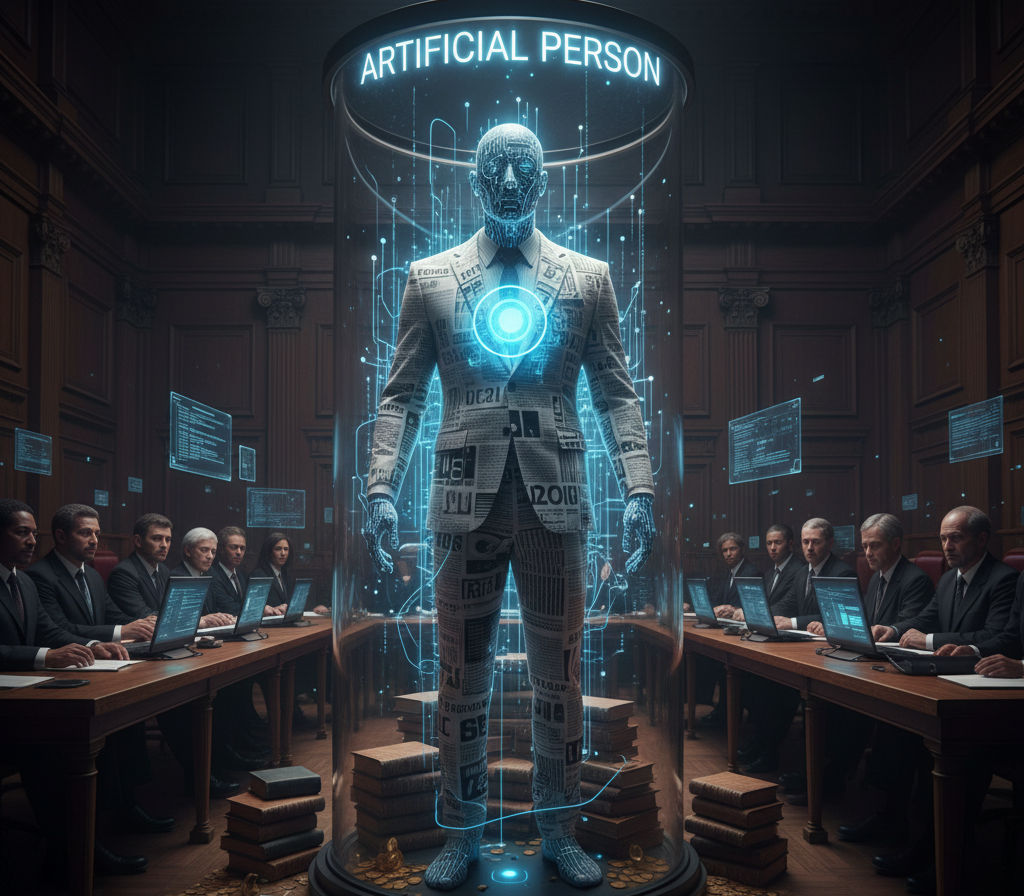
In 1819, U.S. Chief Justice John Marshall delivered a definition that would shape the modern global economy: “A corporation is an artificial being, invisible, intangible, and existing only in contemplation of law.” While that might sound like a description of a ghost or a legal myth, it is actually the bedrock of capitalism. This concept—known as Corporate Personhood—is what allows businesses to sign contracts, sue or be sued, and own property, all while being distinct from the humans who run them.
What Does “Artificial, Invisible, and Intangible” Actually Mean?
To understand this concept, we have to look at the three descriptors Marshall used. Each one serves a specific legal purpose:
- Artificial Person: Unlike a “natural person” (you and me), a company is created through a legal process called incorporation. It doesn’t have a soul, a conscience, or a physical body, yet the law grants it a “personality.”
- Invisible and Intangible: You can visit a company’s headquarters, sit in its chairs, and talk to its CEO, but you cannot “see” the company itself. If the CEO leaves or the building burns down, the company—the legal entity—remains intact.
- Existing Only in the Eye of the Law: The company is a creature of statute. It exists because the government says it does. If the law were to disappear tomorrow, the company would vanish with it.
The “Corporate Veil”: The Secret to Growth
The most significant consequence of being an artificial person is the Separate Legal Entity doctrine. This creates what lawyers call the “Corporate Veil.”
In a partnership or a sole proprietorship, the business and the owner are the same. If the business owes money, the owner’s house is at risk. However, because a company is its own “person,” it owns its own debts. This Limited Liability is why people are willing to invest in stocks. If a company goes bankrupt, the shareholders only lose the money they invested; the “artificial person” takes the fall, protecting the “natural persons” behind it.
The Powers of the Artificial Person
Despite having no physical form, a company enjoys many of the same rights as a human being. These include:
- Perpetual Succession: Humans are mortal, but companies can live forever. As the saying goes, “Members may come and members may go, but the company can go on forever.”
- The Right to Contract: A company can enter into agreements in its own name. When you buy a coffee from a global chain, your contract is with the “artificial person,” not the barista.
- Owning Property: A company can own land, intellectual property, and machinery. These assets belong to the company, not the shareholders.
- Right to Sue: If a company’s reputation is slandered or its patents are stolen, the company itself files the lawsuit.
The Moral Paradox: Can an Artificial Person Do Wrong?
The “invisible and intangible” nature of a company presents a unique challenge: Accountability. If a company commits a crime, you cannot put an “artificial person” in jail. This has led to the development of the “Identification Principle,” where the law looks for the “directing mind and will” of the company (usually top executives) to assign blame.
Furthermore, because a company is “intangible,” it has no personal ethics. Its primary directive is often the maximization of shareholder value. This is why modern Corporate Social Responsibility (CSR) is so important—it acts as a “synthetic conscience” for an entity that lacks a biological one.
Conclusion
The idea of a company as an artificial person is one of humanity’s most powerful inventions. It is a legal fiction that allows for massive collaboration, risk-taking, and long-term planning that would be impossible for individual humans alone.
While it may be invisible and intangible, its impact on our world is anything but. From the smartphone in your pocket to the energy powering your home, we live in a world built by these legal “ghosts.” Understanding their nature is the first step in understanding how our modern world functions.
Comments 0